Miga Town: My World
- 4.2
- Rating
- 50.00M
- Installs
- Free
- Price
 Analysis by App-foxy
When I first opened Miga Town: My World, I did not feel as if I was being pushed toward a score, a timer, or a fixed mission. I felt more like I had entered a small playroom where the main job was deciding what to do next. That relaxed beginning explains the game better than its short “Miga Town” label: this is a free educational game built around discovery and creation, and its appeal comes from letting children arrange their own little stories.
My first impression was especially clear because the game does not ask for the same kind of attention as a traditional puzzle or learning app. There is no pressure to answer quickly, defeat an opponent, or complete a long chain of objectives. Instead, the experience invites exploration through places, characters, objects, and everyday situations. For a child who enjoys pretending, that open structure can be more engaging than a lesson presented as a lesson.
The game is suitable for Everyone, which matches its gentle presentation. It is made by XiHe Digital (GuangZhou) Technology Co., Ltd., and its large audience shows that the format has reached well beyond a small niche: it has passed 50 million installs and holds a 4.2 average from around 733 thousand ratings. Those figures do not guarantee that every child will enjoy it, but they do suggest that the simple role-playing approach has broad appeal.
You May Also Like

 Blood Strike: 2.5 Anniversary
Blood Strike’s Loadouts Turn Every Drop Into a Tactical Gamble
A close look at Blood Strike’s custom loadouts: how fast access to signature weapons reshapes its battle royale rhythm, rewards preparation, and narrows the gap between fights.

 Pandora - Music & Podcasts
Pandora’s Music Is Easy to Start, but Harder to Recover
Pandora’s strength is its low-effort path from a seed to a station. Its weak spot is how much confidence it asks you to place in connection, setup, and quiet recovery.

 8 Ball Pool
 Is Built on Rivalries, Rematches, and Routine
A close look at the rivalries, rematches, shared routines, and unanswered safety questions that turn a quick pool match into a persistent mobile community.

 Samsung Music
’s Quiet Strength Is Playing What You Already Own
Its reach comes less from spectacle than from dependable access to a personal library. That simplicity is both the app’s strongest retention engine and its ceiling.

 AccuWeather: Weather Radar
AccuWeather Review: A Quick, Clear Forecast for Everyday Decisions
For everyday plans, the best forecast is the one you can understand quickly. AccuWeather makes rain timing, radar, and local conditions easy to act on, with a few trade-offs.

 Hill Climb Racing
Why Hill Climb Racing Still Turns Crashes Into One More Run
A tiny car, a bumpy hill and one more upgrade: Hill Climb Racing keeps resurfacing because its simple chaos makes every near-miss feel personal.
More From Our News Desk



How the world communicates without many rules
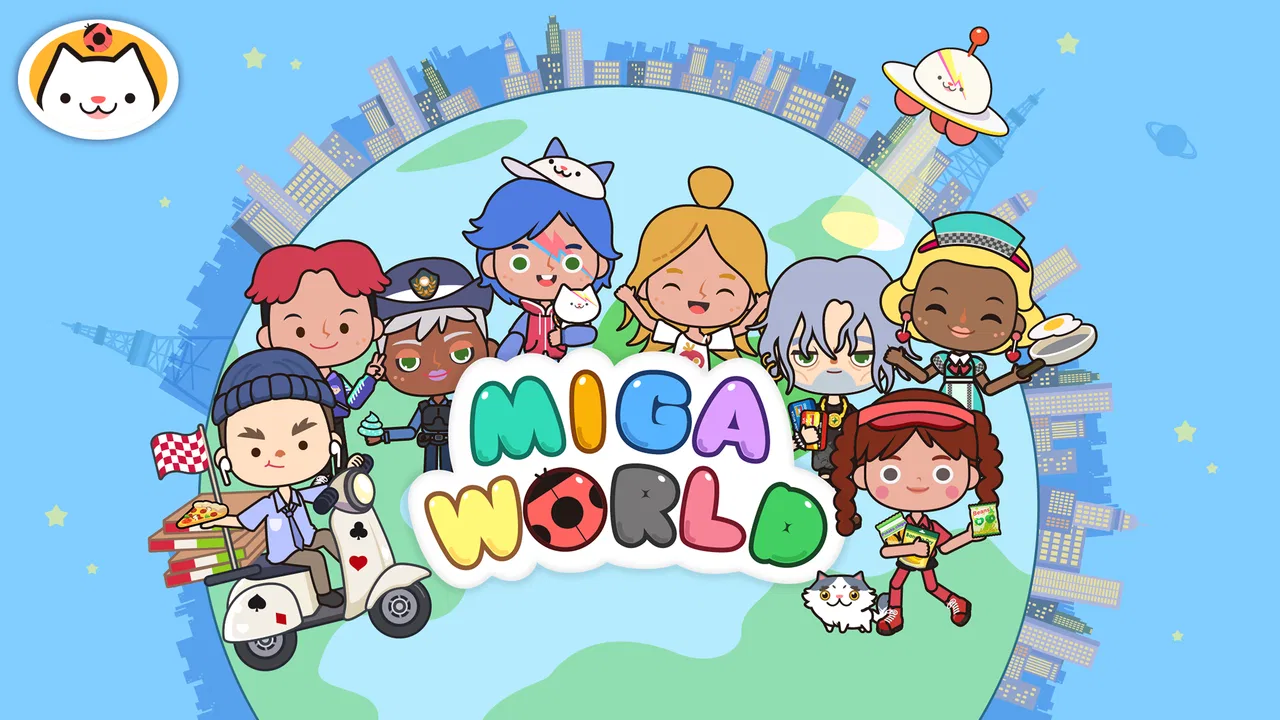
The strongest part of the design is its visual language. The locations, characters, and objects are drawn in a bright, friendly style that makes their purpose easy to understand. A child does not need a long explanation to recognize that a room is meant for arranging, that an object can belong in a scene, or that a character can take part in a pretend situation. The artwork does much of the teaching before any adult has to explain the controls.
I like that the setting feels more like a collection of familiar social spaces than a fantasy world with complicated lore. That choice gives children room to invent their own context. A character can be part of a family scene, a shopping trip, a classroom-style activity, or an entirely improvised story. The game’s educational value is therefore indirect: it encourages observation, language, sequencing, and social imagination through play rather than through quizzes.
That freedom also creates an important trade-off. Children who want a clear objective may initially wonder what they are supposed to accomplish. In a conventional educational game, the next exercise is usually obvious. Here, the adult may need to demonstrate a starting idea, such as arranging a room, assigning roles to characters, or creating a short everyday scenario. Once the child understands that the scene itself is the activity, the lack of a strict goal becomes a strength instead of a weakness.
I found the setting most useful when I treated it as a prompt generator. Rather than handing over the device and expecting endless independent play, I could suggest a small challenge: prepare a place for visitors, create a morning routine, or show what happens before and after a character leaves home. These prompts turn a loose sandbox into a practical storytelling exercise without taking away the child’s control.
Another useful detail is that the game can support conversation away from the screen. After a child creates a scene, an adult can ask why a character is there, what happened first, or what might happen next. That makes the app more valuable for younger players who are still developing vocabulary and narrative confidence. It is not a replacement for a structured reading or mathematics program, but it can become a lively starting point for talking and imagining.
Art direction that supports play
The colorful art is not merely decoration. It reduces the effort needed to understand the world. Clear silhouettes and expressive character designs help a child decide which object belongs to a scene and which character might fit a role. The visual simplicity also keeps the focus on arranging and pretending instead of making the player study a complicated interface.
At the same time, the cheerful look may feel repetitive to older children who want a more detailed simulation. The game is aimed at open-ended creative play, not realism. A child looking for deep building tools, detailed customization, or a long narrative campaign may find the visual style charming at first but limited over time. I would recommend it more readily to children who enjoy dollhouse-style play than to children who need constant challenge.
One tip that made the experience more satisfying was to begin with a small scene instead of trying to explore everything at once. I would choose one location, a few characters, and a single event. This kept the story understandable and made it easier to notice how the objects and characters worked together. It also prevented the common problem of moving items around without any clear idea of what the child was creating.
Sound, pacing, and the feeling of an unhurried game
The overall mood is calm because the pacing is controlled by the player. There is no countdown forcing a decision, and the experience does not depend on rapid reactions. That makes it comfortable for children who become frustrated by timed tasks or who need space to think through a pretend scenario. The quiet rhythm also suits short sessions after school, when a demanding action game would be too much.
Sound plays a supporting role rather than dominating the experience. The atmosphere depends mainly on the combination of bright visuals, gentle interaction, and the absence of competitive urgency. I appreciate that balance because it leaves room for the child’s own narration. When a player is speaking for characters or explaining a story, an overly busy soundtrack would compete with the most valuable part of the activity: the child’s imagination.
The slower rhythm has another consequence: the game can look inactive if a child expects constant rewards. There is no need to rush from one event to another, so the experience works best when the player enjoys arranging details. Parents should not present it as a game that will automatically hold attention for a long stretch. Its appeal is more focused and personal; it can occupy a child through a scene they care about, but it may not provide enough momentum for every session.
I found that a simple routine improved the pacing. A child could spend a few minutes exploring, then create one scene, then explain it aloud. That approach gave the play session a beginning, middle, and end without imposing a formal level system. It also made it easier to stop naturally rather than interrupting a child in the middle of a complicated mission.
This is where the game differs from many educational alternatives. Apps based on spelling, arithmetic, or memory exercises usually measure progress through correct answers. Miga Town: My World measures nothing in that way. Its rhythm is closer to imaginative play with digital materials. If your goal is repeated practice in a specific school subject, a dedicated learning app will be more efficient. If your goal is to encourage storytelling and independent choices, this gentler pace is much better suited.
Where the mechanics fit—and where they do not
The mechanics are easy to understand because they serve the creative premise. The player explores, selects, moves through situations, and builds scenes from available elements. That simplicity is valuable for younger children, especially when an adult wants to encourage independent play without explaining a long rule set. The game does not bury its central idea under complicated menus or competitive systems.
Its best mechanical quality is the connection between action and imagination. Moving a character or arranging an object is not just a task; it changes the story the child is telling. A room can become a place for preparation, a meeting, a celebration, or a quiet moment depending on what the player decides. That relationship gives ordinary interactions more meaning than they would have in a purely decorative app.
A practical use case is a child who has difficulty starting pretend play. Instead of asking them to invent an entire story from nothing, an adult can point to one character and ask what that character needs today. The child can then use the game’s setting to build the answer. This gradual approach lowers the creative barrier and can be especially helpful for children who prefer prompts before they begin speaking or drawing.
Another non-obvious strength is its usefulness for collaborative play between siblings or a parent and child. One person can arrange the setting while the other invents dialogue or decides what happens next. Because the game is not built around winning, the collaboration does not have to become a contest. That said, adults may need to establish turns, since open-ended object play can still lead to arguments when two children want to control the same scene.
The mechanics are less suitable for anyone searching for a complete curriculum. The educational benefit comes from the way the player thinks and communicates, not from a clearly sequenced academic syllabus. I would not install it as the only learning tool for a child who needs structured practice in reading, numbers, science, or another defined subject. It can complement those tools, but it should not be mistaken for them.
The free entry point makes trying it easy, but the presence of in-app purchases ranging from $0.99 to $69.99 per item means I would involve an adult in managing access. The game is free to download, yet families should still pay attention to purchase controls and explain clearly what can and cannot be bought. This is not a criticism of the creative format itself; it is simply an important part of deciding whether the app fits a shared family device.
The current version is 1.99 and it requires Android 5.1 or later. For a parent choosing an older device, checking compatibility before planning a shared installation is sensible. On supported hardware, the low-pressure design is easy to approach, but the quality of the experience still depends on the child’s expectations. A player looking for action may call it slow, while a player who likes arranging scenes may find that same quietness relaxing.
Who will get the most from it
I would recommend this game to children who enjoy dollhouses, role-play, drawing situations, and making up conversations. It is also a good option for an adult who wants a screen activity that can lead into discussion rather than ending with a score. The Everyone age rating makes the tone approachable, although younger children may still benefit from a first guided session so they understand how to turn free exploration into a story.
I would be more cautious about recommending it to children who need firm goals, visible progression, or frequent rewards. It may also disappoint players who want a competitive multiplayer experience, a difficult puzzle campaign, or a detailed construction simulator. In those cases, a focused educational app or a more rules-driven game would probably provide clearer motivation.
For everyday use, I can imagine opening it during a short quiet period while a parent prepares dinner. The child could create a small household scene, decide what each character is doing, and later describe the result. The value would not come from leaving the game running in the background; it would come from giving the child a manageable creative task and then listening to the explanation. That small change in approach makes the game feel purposeful rather than merely distracting.
My atmosphere verdict
Miga Town: My World succeeds because its art direction, sound, and pacing all support the same idea: play without pressure. The bright world makes exploration approachable, the calm rhythm leaves space for imagination, and the simple mechanics let a child turn ordinary objects and characters into a personal story. I especially like that the game can be used as a bridge between digital play and real conversation.
Its limitations are closely tied to its identity. The open structure may feel vague, the relaxed pacing may not satisfy children who want constant action, and the creative play should not be confused with a structured academic course. Families also need to handle the available in-app purchases thoughtfully. Those are meaningful considerations, but they do not undermine the game when it is given to the right player.
Released on November 27, 2019, the game has remained visible in a crowded educational category, and its broad adoption helps explain why. XiHe Digital (GuangZhou) Technology Co., Ltd. has built an experience that is easy to enter without making every moment feel like a lesson. For me, the best way to use it is not as a substitute for books, outdoor play, or subject-focused learning, but as a digital stage for creating and discussing small stories.
My recommendation is simple: choose it when you want gentle, imaginative play with a clear visual identity and no pressure to win. Start with one setting and one story prompt, play alongside the child at first, and let the child gradually take over. If that kind of open-ended creation sounds enjoyable, this free game is worth trying. If you need measurable lessons or a strong progression system, another category of app will serve you better.
FAQs for Miga Town: My World
01What is Miga Town: My World and what can I do in it?
Miga Town: My World is an interactive mobile game designed for creativity and exploration. Players can create their own stories by exploring a vibrant world with various locations, characters, and objects. The game offers endless possibilities for role-playing, making it ideal for kids who love to imagine and create their own adventures.
02Is Miga Town: My World suitable for children?
Yes, Miga Town: My World is designed with children in mind. It offers a safe and engaging environment where kids can explore, learn, and use their imagination. The game features colorful graphics and user-friendly controls, making it accessible for young players. However, parental guidance is recommended to ensure appropriate screen time.
03Does Miga Town: My World require an internet connection to play?
No, Miga Town: My World can be played offline, which is perfect for parents who want to limit their child's internet usage. Once the game is downloaded, players can access all features without needing an active internet connection, making it convenient for travel or areas with limited connectivity.
04Are there in-app purchases in Miga Town: My World?
Yes, Miga Town: My World offers in-app purchases. While the game is free to download, additional content or features may require payment. Parents should be aware of this option and may want to disable in-app purchases to prevent unauthorized spending by children.
05How often does Miga Town: My World receive updates or new content?
The developers of Miga Town: My World regularly release updates and new content to keep the game fresh and engaging. These updates often include new locations, characters, and items to enhance the player's experience. Players are encouraged to check for updates in their app store to ensure they have the latest version.
Pros
- Vibrant and engaging graphics.
- Wide variety of interactive locations.
- Customizable characters and outfits.
- No in-app ads interrupting gameplay.
- Encourages creativity and exploration.
Cons
- Limited free content available.
- In-app purchases can be expensive.
- Requires internet for full features.
- Some areas lack detailed interactions.
- Occasional glitches in character movements.

Miga Town: My World
Gallery